AI Agents in 2025: The Future of Work is Here
The world of Artificial Intelligence is rapidly evolving, and 2025 is shaping up to be a pivotal year for the rise of AI agents. No longer simply tools performing automated tasks, AI agents are becoming increasingly sophisticated, capable of autonomous action and complex decision-making. This shift is poised to fundamentally change how we work, innovate, and interact with technology. This blog post will dive into what you need to know about AI agents and how they’ll impact the future.
What *are* AI Agents?
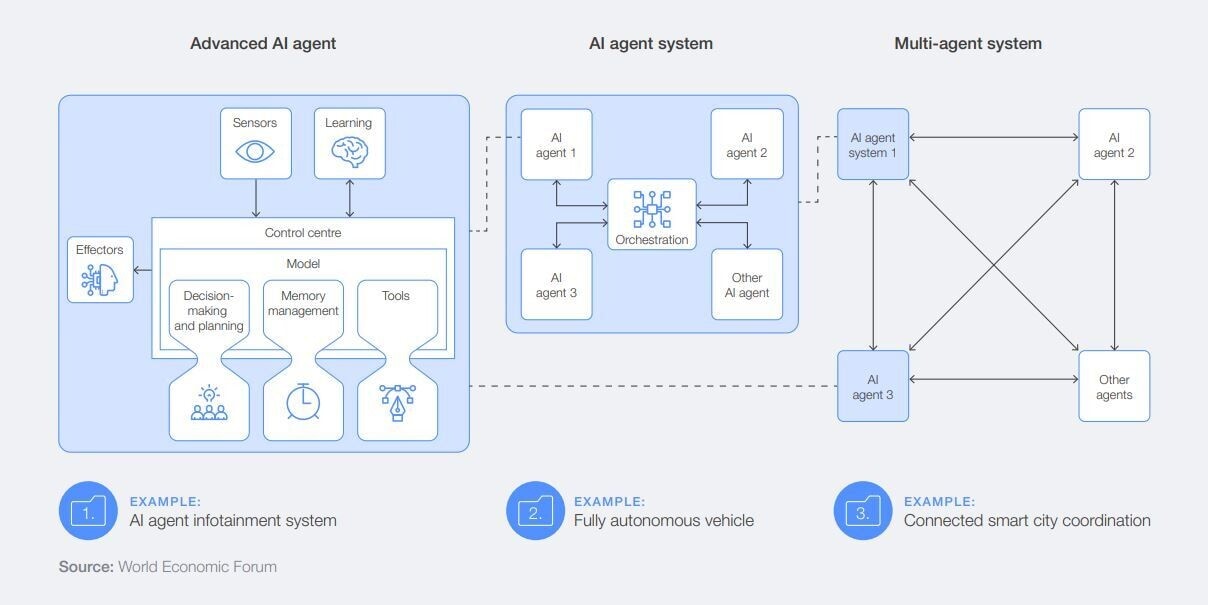
An AI agent is a software entity that can perceive its environment through sensors and acts upon that environment through effectors. Unlike traditional AI which requires explicit programming for every scenario, AI agents utilize machine learning, particularly large language models (LLMs), to adapt and learn over time. They can operate independently to achieve specific goals. They’re often described as ‘digital workers’ and are seen as a logical evolution from the current wave of generative AI.
Think of it this way: a chatbot responds to your questions. An AI agent, however, can *proactively* solve problems. It can set goals, prioritize tasks, and even utilize other AI tools to achieve them. This has huge implications for productivity and efficiency.
The Rise of Multi-Agent Systems
It isn’t just about single agents though. A growing area of focus is multi-agent systems. These systems involve multiple AI agents working together to accomplish a larger, more complex task. Deloitte highlights the potential of these systems to reshape industries by streamlining processes and unlocking new AI use cases. Learn more about multi-agent systems here.
Skills Needed to Manage the AI Agent Revolution
As AI agents become more prevalent, a new set of skills will be in high demand. The World Economic Forum predicts that leaders will need to adapt to managing these ‘digital workers’. The required skillset will extend beyond technical expertise, focusing on these crucial areas:
- Prompt Engineering: Crafting effective prompts to guide AI agents is critical.
- System Thinking: Understanding how AI agents integrate within larger systems and workflows.
- Ethical Oversight: Ensuring responsible and unbiased AI agent behavior.
- Adaptability & Continuous Learning: The landscape is evolving rapidly; staying updated is essential.

Use Cases Shaping the Future
AI agents are already finding application in a variety of fields:
- Customer Service: Handling complex inquiries without human intervention.
- E-commerce: Personalized shopping experiences and inventory management.
- Software Development: Automating code generation and testing.
- Financial Services: Fraud detection and risk assessment.
Mirakl emphasizes the role of AI agents in commerce, noting the importance of high-quality images for AI interpretation. Read more about AI in commerce.
Looking Ahead

The next few years will be crucial for the development and adoption of AI agents. As the technology matures, we can expect to see even more innovative applications emerge. Understanding the potential and preparing for the shift is key. Resources like Mistral AI are at the forefront of building the fundamental models powering these agents. Embracing this evolution is not just about keeping up with technology; it’s about unlocking a new era of productivity, innovation, and problem-solving.
Ready to explore more? Check out Futurepedia for a curated list of AI tools and resources.
Để lại một bình luận